CIVIC MUSEUM OF NATURAL HISTORY
Overview
The Civic Museum of Natural History is housed in Villa Gardella, a late 19th century council-owned mansion surrounded by a public park.
The museum is run by the Stazzano Naturalists’ Association.
The exhibition trail depicts and traces the evolution of the Earth and the living beings inhabiting it, and provides some insight into the environmental features of the Alessandria region.
No architectural barriers.
Collections
The Museum takes up three floors of the Villa.
The ground floor is organised in five rooms:
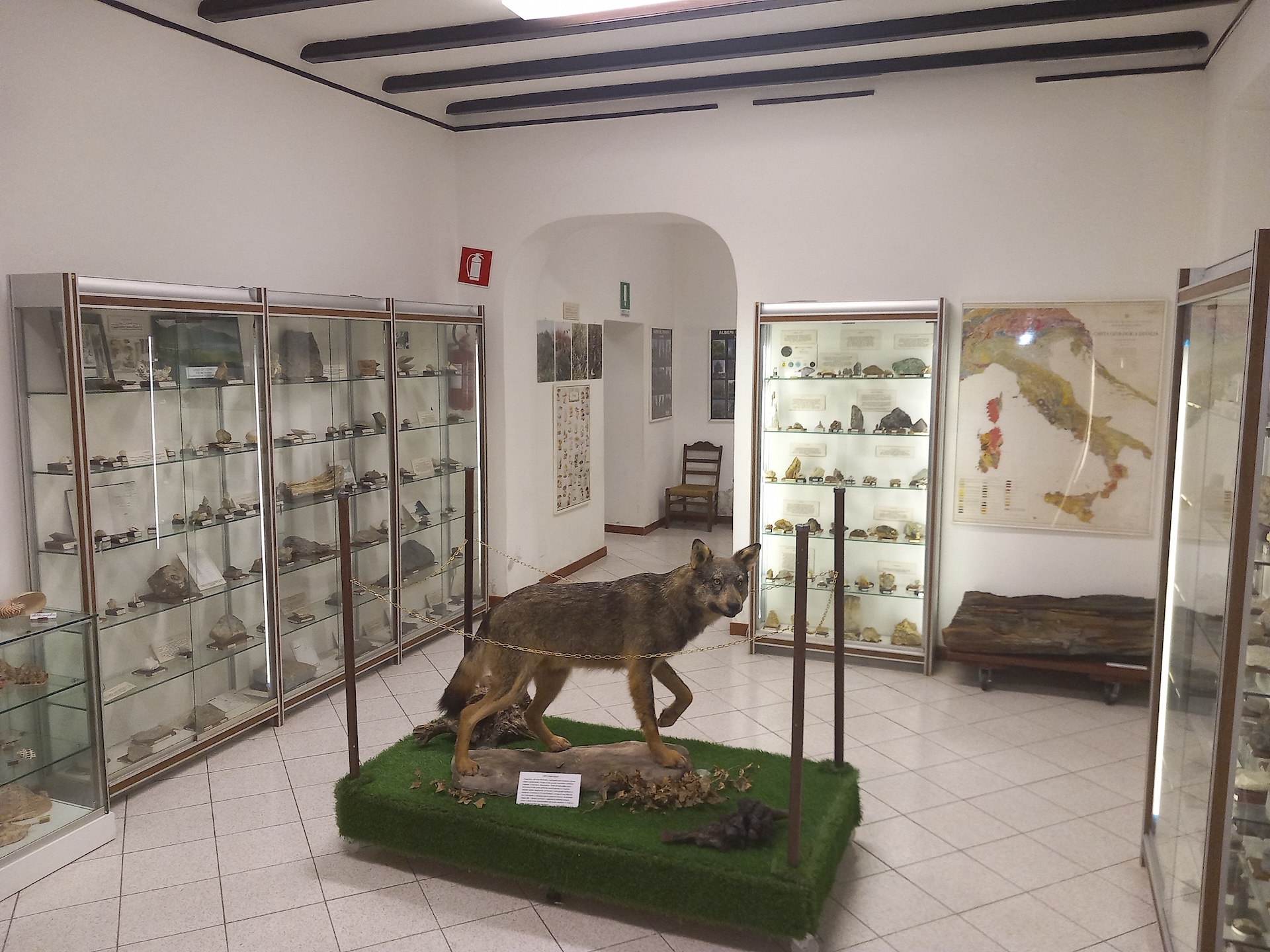
- Earth Science Hall.
Three showcases display portions of the most representative collections of fossils, minerals and rocks, all from the Alessandria region.
As a centrepiece of the hall, a male wolf specimen is displayed. - Botany Hall.
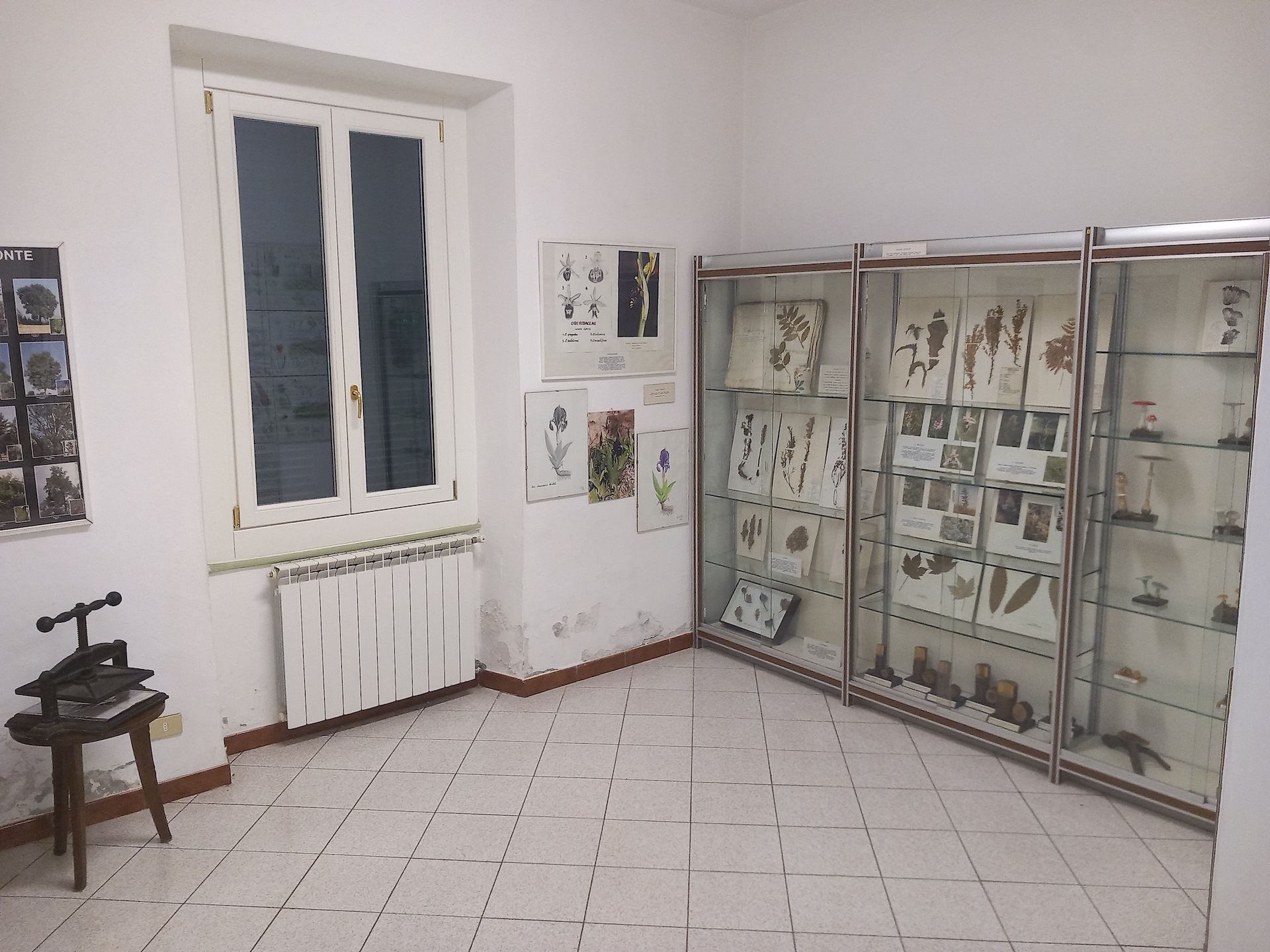
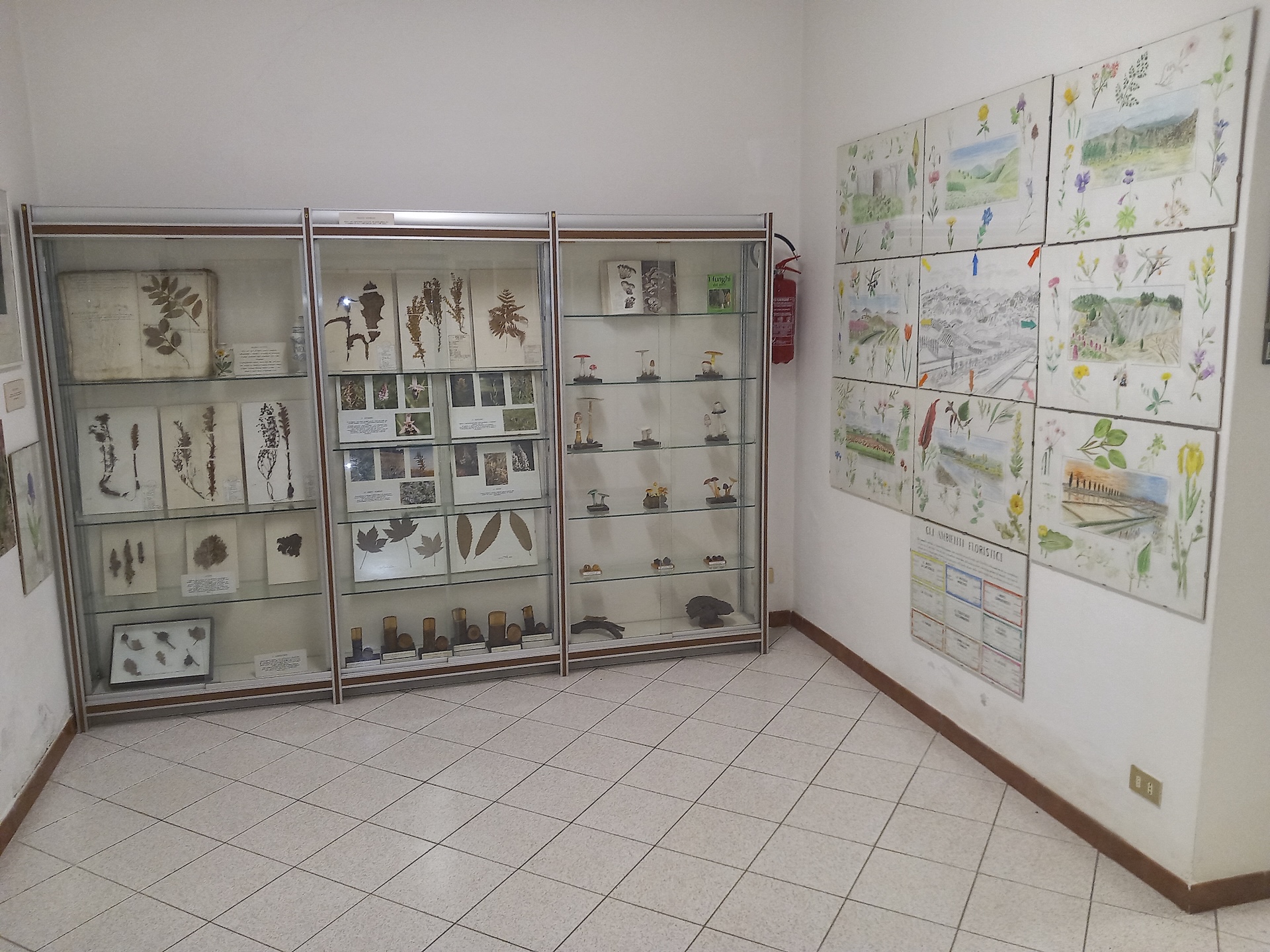
Nine panels depict the main flora environments of the Alessandria region.
A showcase holds samples of edible and poisonous mushrooms.
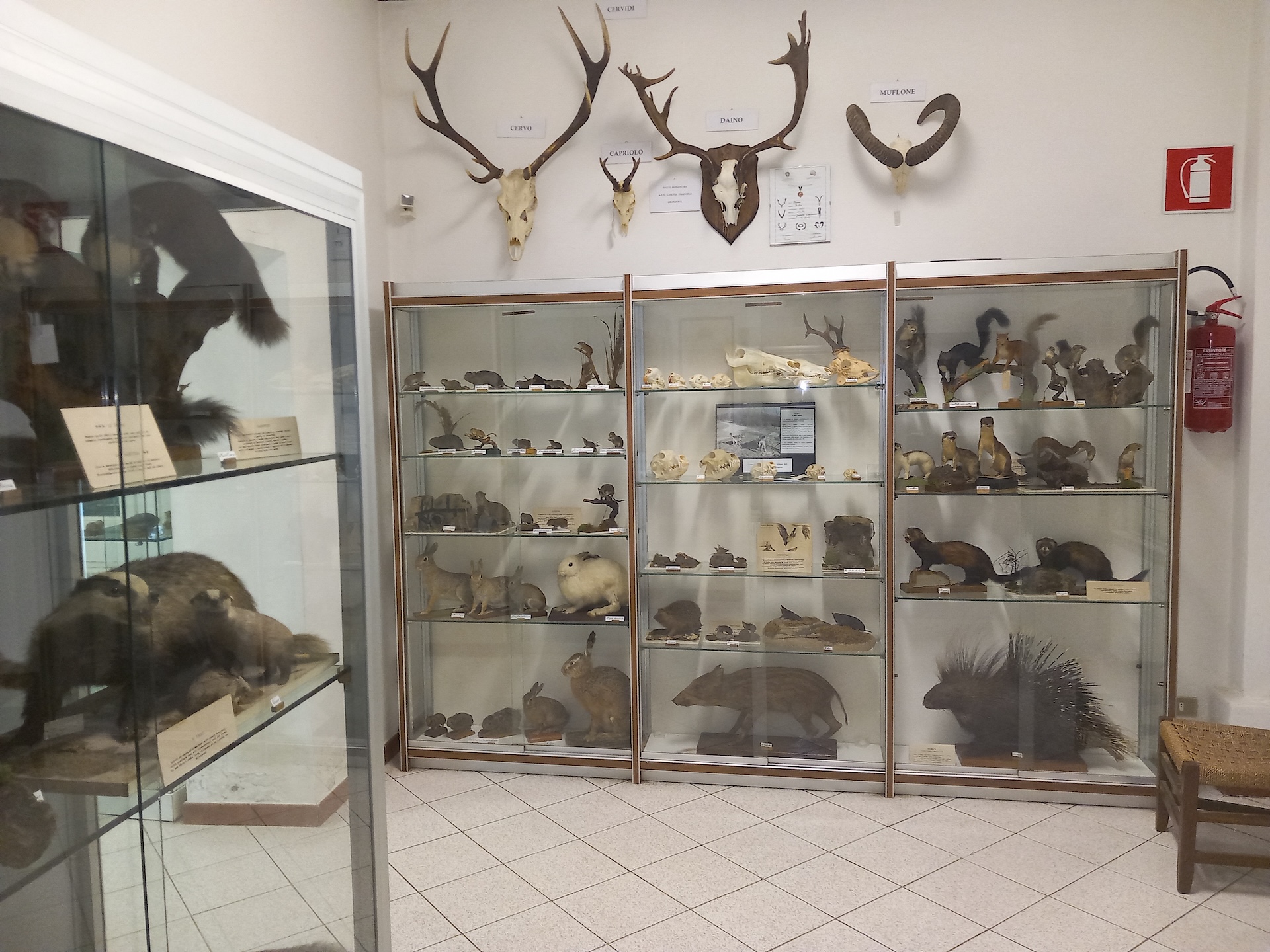
Several herbaria with native species, including a worthy of note 18thcentury one, are on display. - Mammals, Amphibians, Reptiles and fish Hall.
The showcases hold both the most representative and common finds of the area.
oteworthy are the first porcupine specimen found in Piedmont in 2003 and the skull of a female golden jackal found in 2022 in the Viguzzolo area (Alessandria province). - Invertebrates Hall.
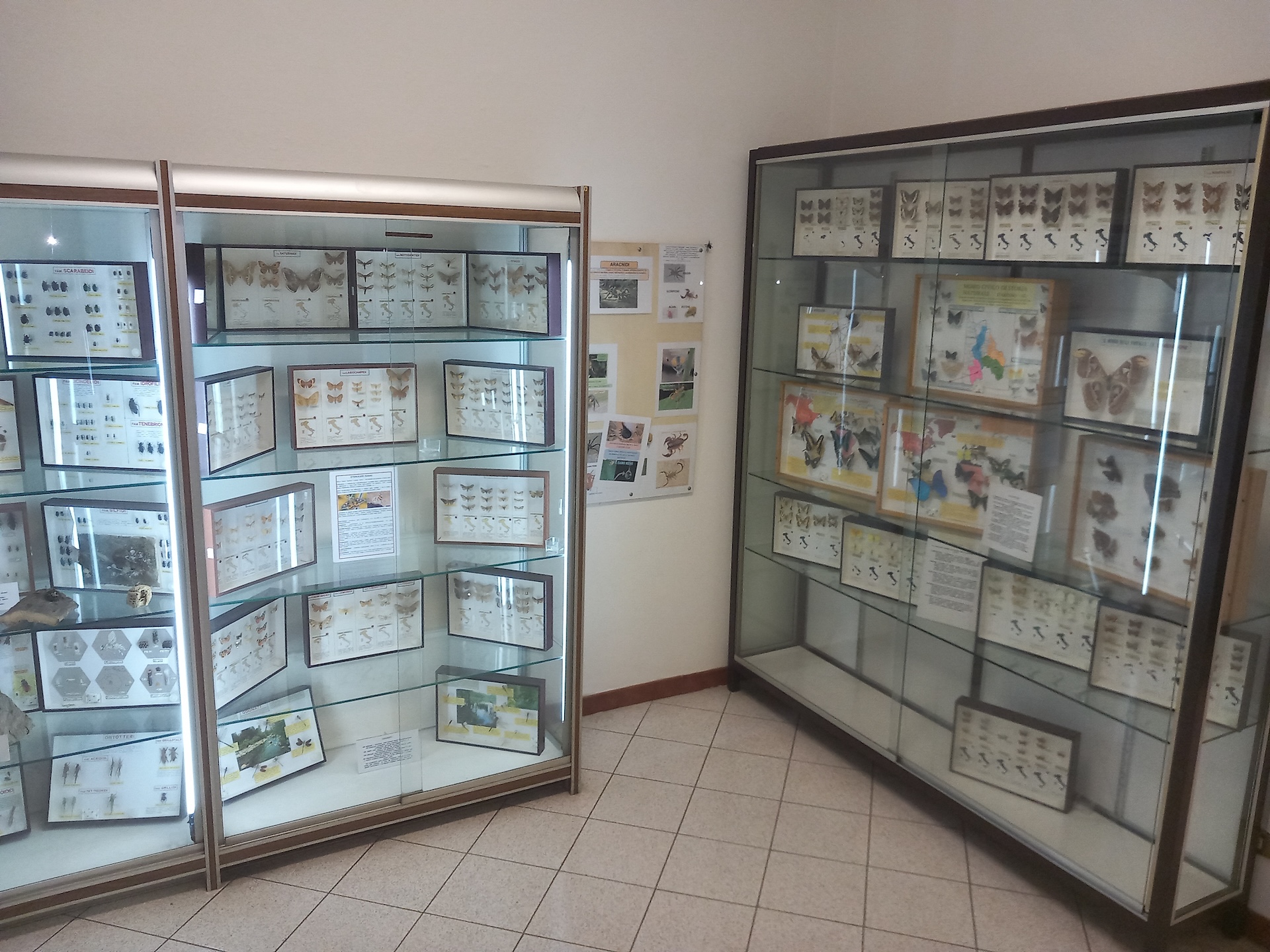
Specimens of arthropods belonging to different orders from around the world are on display.
Most of them are from Europe.
Plenty of space is dedicated to their ecology, depicting their complex life cycles, mimicry, migration and geographical distribution.
The entomological collection counts 20,000 specimens, out of which only a small part is on display. - Hall of Birds.
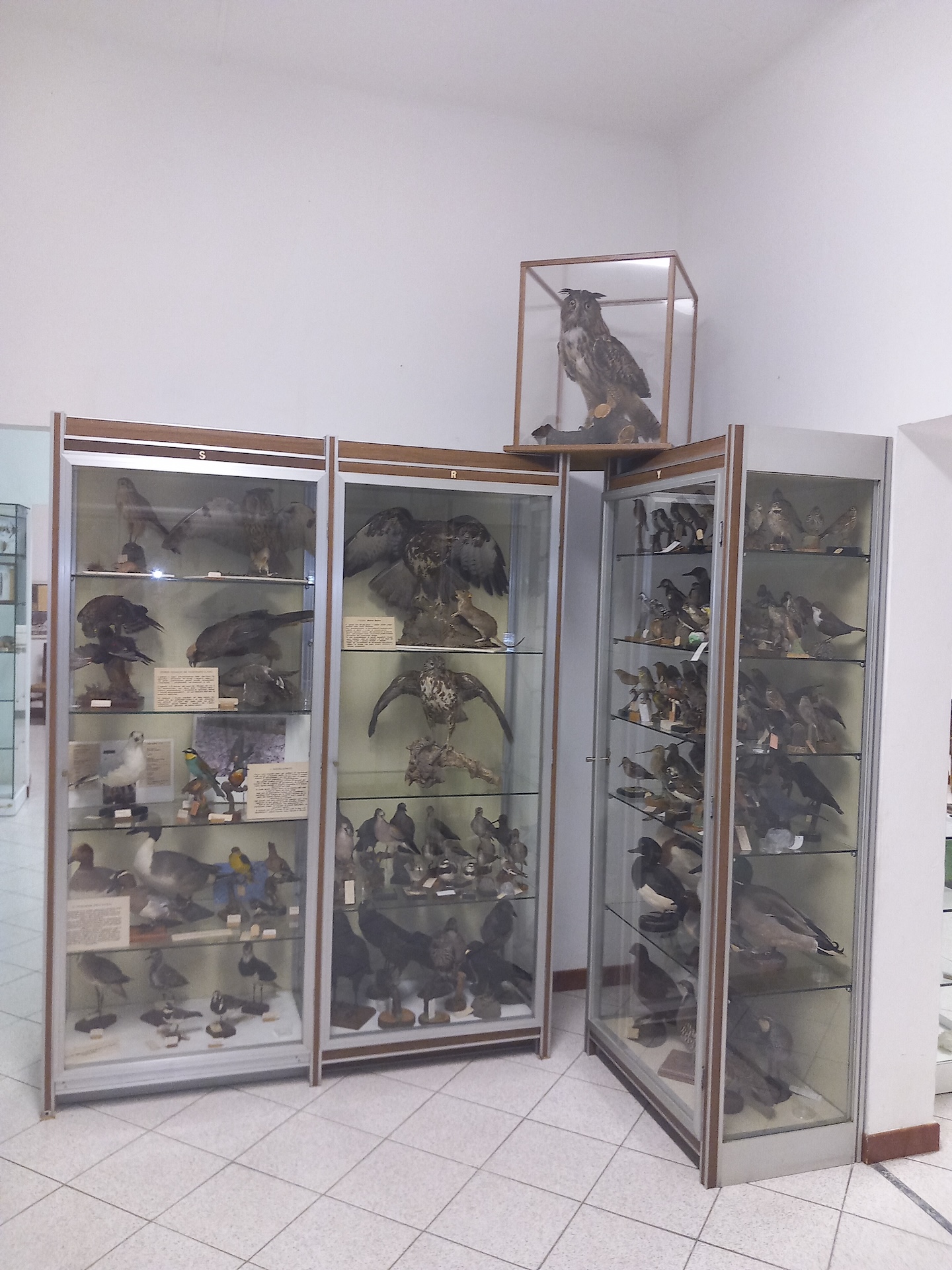
Taxidermied specimens and explanatory panels describe bird evolution from egg to adulthood.
Some showcases treat nesting, plumage, parasitism, mimicry, predation, migration and ringing.
A showcase featuring diurnal and nocturnal birds of prey, including a specimen of eagle owl and golden eagle, complements the hall.
The first floor houses:
- a meeting room;
- a herbarium of over 5,000 sheets of specimens, collected mainly in the Alessandria area;
- a portion of the ornithology collection;
- the museum library.
The second floor houses a workshop and non-viewable collections of mineralogy, palaeontology, theriology, osteology, ornithology and entomology.
Library
The library holds over 2,000 volumes, magazines, catalogues and publications available for consultation on site.
Activities
The Museum provides:
- guided tours for schoolchildren and groups;
- extra openings for special community events: festivals, fairs, events;
- research activities and collaboration with other museums in Piedmont and national universities;
- a newsletter with information and announcements concerning local scientific work.
Gallery
How many things can one learn about the natural world? Find it all out at the Regional Museum of Natural Sciences!