Frabosa Marble Ecomuseum
Overview
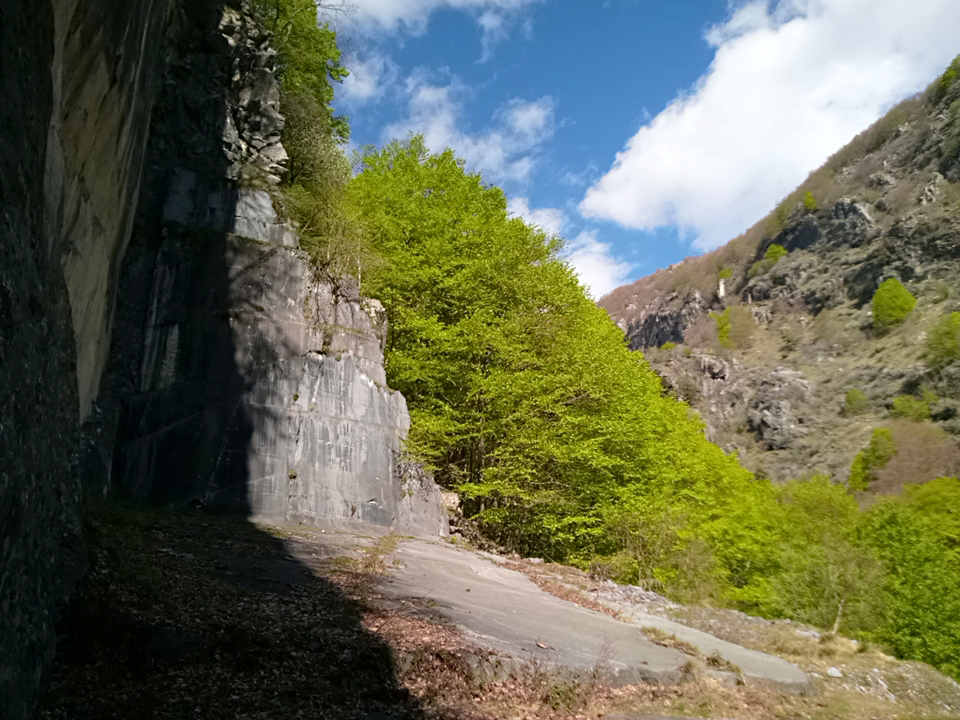
The Monregalese valleys have historically been known for their abundance of marble sites, some of the most significant in Piedmont.
The main topic of the Frabosa Soprana Ecomuseum is marble, once cultivated in several local quarries.
The marble from Frabosa comes in a variety of colours: from Greyish-brown to Black Vallone, from Yellow to Verzino Violet, from Purple Piedmont to the prized Pink Persichino.
Over the centuries, polychrome marble from Frabosa has gained increasing recognition as a material suitable for architectural decorations of high artistic value, in Piedmont especially for Baroque buildings.
They are found, for instance, in:
- Vicoforte Shrine;
- Mondovì Cathedral;
- some 17th to 20th century churches in Turin, such as:
- Chapel of the Holy Shroud;
- Gran Madre di Dio;
- Superga Basilica;
- San Carlo church;
- Monte dei Cappuccini’s church.
Marble from Frabosa has also been widely used to build:
- roads;
- paths and buildings in the central district;
- the hamlets and villages in the Monregalese area;
- major works abroad, such as in London and South America.
Verzino Violet marble can be seen both in the structural and ornamental elements of the buildings, such as:
- corbels;
- entrance cornices;
- wainscoting;
- balustrades;
- gutters and rainwater drains.
The Ecomuseum houses:
- samples from the mining-petrography collection, of historical, artistic, scientific, cultural and ethnographic value;
- marble artefacts, all of them privately owned;
- a permanent exhibition with photographic display, in the atrium of the Town Hall, on material processing, from extraction sites to destination sites, and about the stonemasons' way of life and working methods.
A multimedia totem enriches the exhibition with videos on the Kyé language culture and the history of the Frabosa Soprana old marble quarries;
- a travelling photographic exhibition;
- Marbles to Touch art installation, with boxes stating the type of marble, location and quarry of origin;
- Frabousan Ki Taiou knife workshop, with an exhibition of cutting tools and the Frabosa knife-making art, which dates back to 1790. It is located in Frabosa Soprana and managed by the Frabousan Ki Taiou social promotion association;
- collection of original tools belonging to Riccardo Vinai, the last stonemason in the hamlet of Fontane in Val Corsaglia, who passed away in 1996;
- roll-up display depicting and describing the Frabosa Marble Ecomuseum;
- sail flags with images of and captions about quarries and marble from Frabosa Soprana.
The Marble Ecomuseum aims at:
- studying and documenting the activities of the Frabosa Soprana marble quarries, focusing on the construction sites of the Baroque architecture in Piedmont;
- revalorising the old quarry sites;
- revaluating the ancient professions of the area, including those not related to quarrying activities.
The Marble Ecomuseum is managed by the Municipality of Frabosa Soprana and forms part of the Piedmont Ecomuseum Network.
Activities
The Museum provides:
- The path of stone: free excursions, led by naturalist guides, to discover marble, old hamlets and karst;
- cultural evenings with talks by professionals, writers and historians;
- workshops on handcrafted artefacts of peasant culture: baskets, weaving, wool and the use of wild herbs;
- Educational activities and workshops, both in the classroom and on the field, intended for schoolchildren of the Frabosa Soprana primary school;
- Guided tours for students of all levels, to discover the natural, historical, economic and cultural heritage and the way the territory has been exploited over time;
- The paths of Pluc: narrative routes marked with panels, created by the pupils of the Frabosa Soprana primary school, to uncover local stories and traditions;
- Training courses and internships on marble restoration;
- Museum visits - Frabousan Ki Taiou knife workshop, with blade forging demonstration.
The museum has been collaborating with:
- The E Kyé cultural association, which has set up the E kyé ethnographic museum in the hamlet of Fontane, showcasing daily-use tools once used by the Alpine peoples of Corsaglia Valley;
- Bossea Cave, in Corsaglia Valley, municipality of Frabosa Soprana. It is regarded as one of the most impressive and visited caves in Italy for the variety of concretions, the magnificence of the environment, the abundance of water and underground lakes;
- Polytechnic University of Turin;
- La Venaria Reale Conservation and Restoration Centre;
- Frabousan Ki Taiou Social Promotion Associations.
Virtual tours, videos and webinars
Gallery



How many things can one learn about the natural world? Find it all out at the Regional Museum of Natural Sciences!