Luigi Rolando Museum of Human Anatomy
Overview
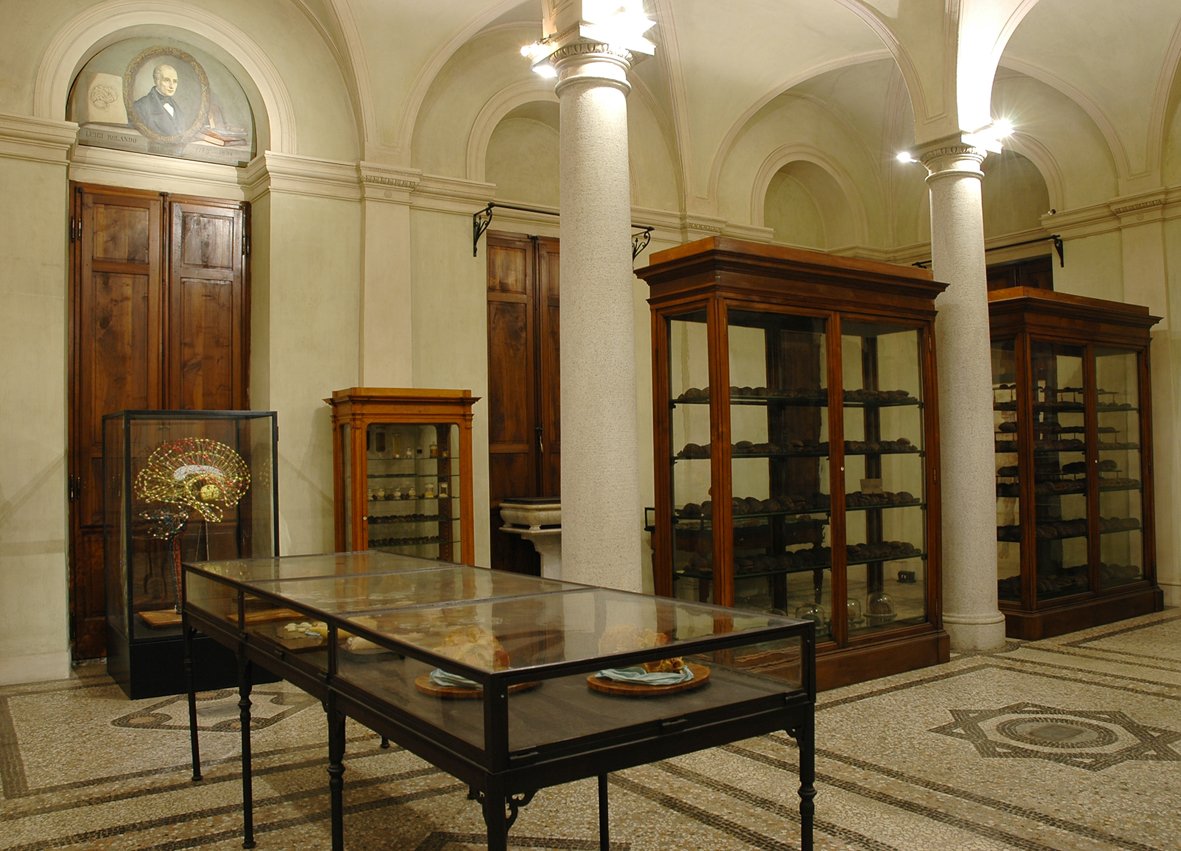
Luigi Rolando Museum of Human Anatomy was established in 1739 as an anatomical museum run by the Royal University, under the patronage of King Carlo Emanuele III.
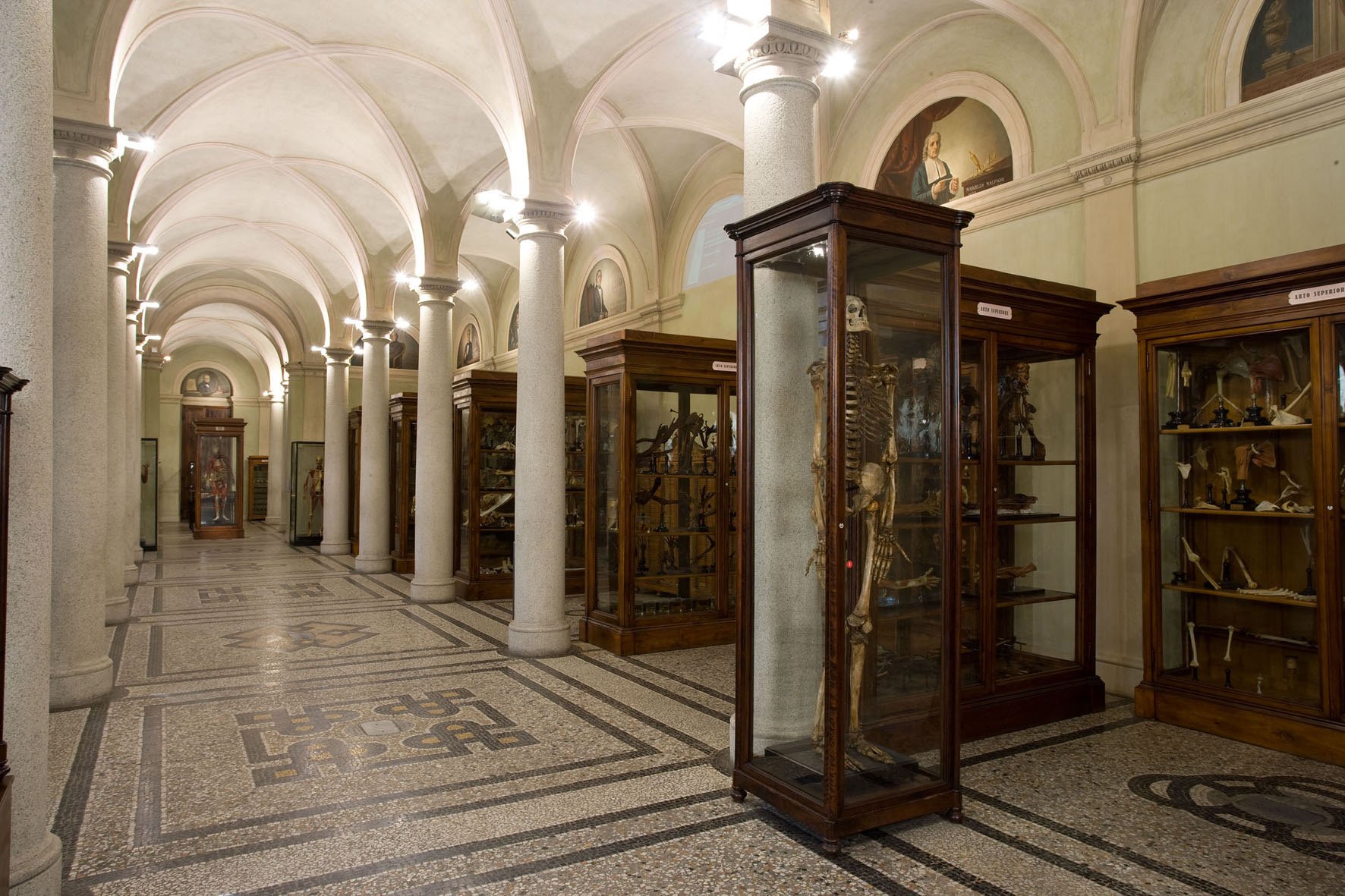
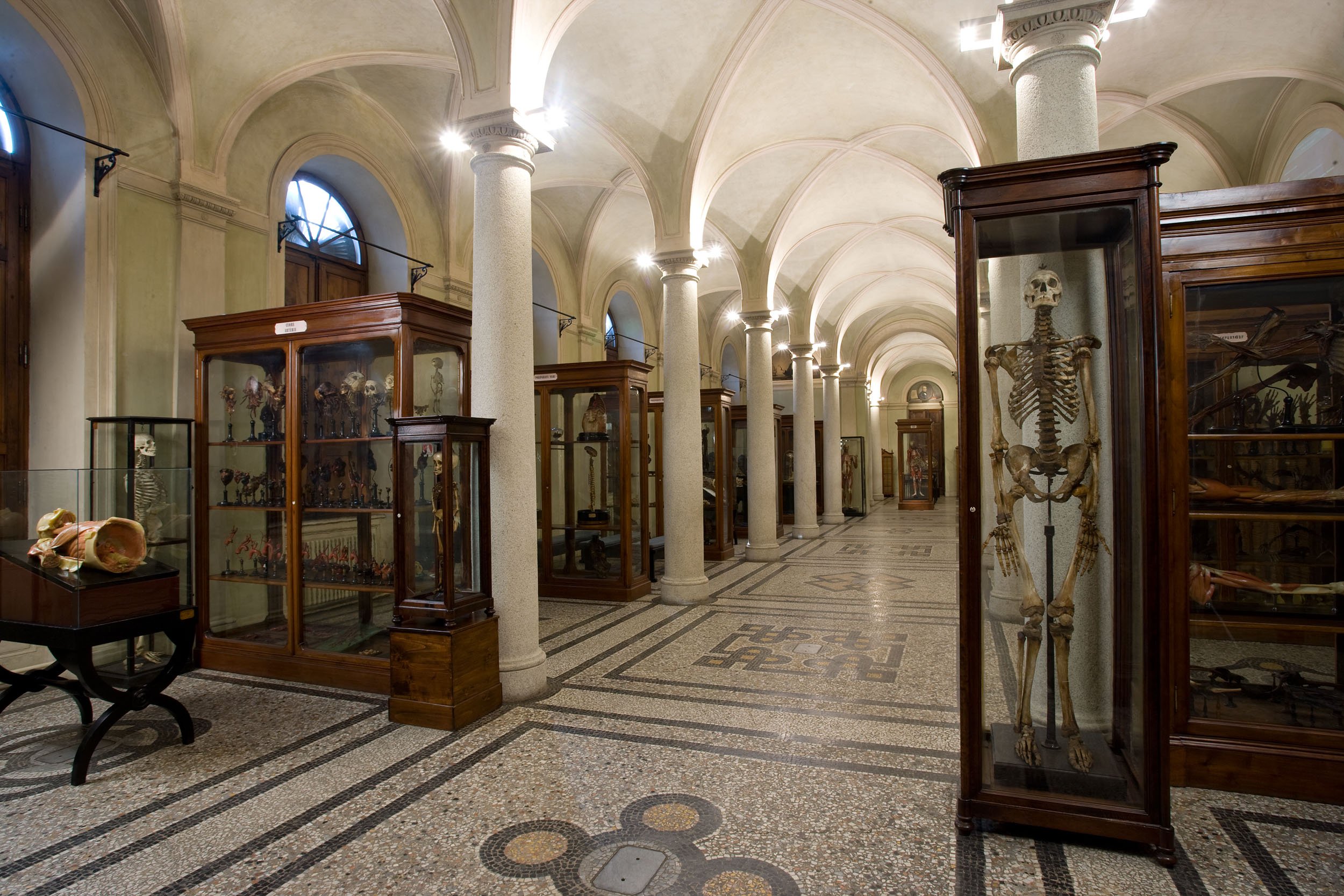
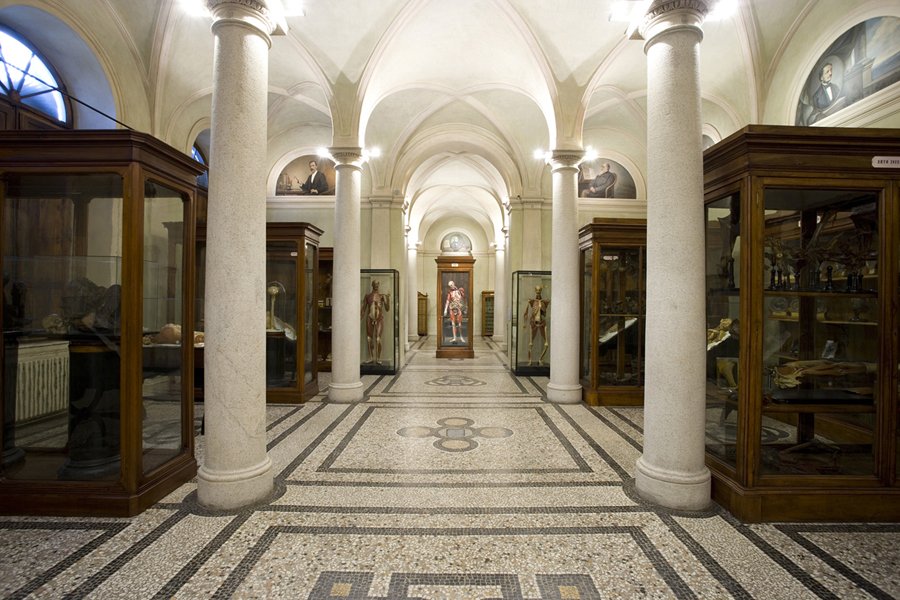
After relocating several times, the anatomy collections were dislocated in the premises currently in use in 1898.
Their architecture emphasised the reputation of Turin's anatomy school at the end of the 19th century.
The layout did not undergo any major changes during the 20th century.
It is now an outstanding example of a nineteenth-century science museum which has remained nearly untouched.
The showcases, filled with preparations, are almost devoid of explanatory texts, as usual in a 19th century museum.
The decision not to alter the atmosphere of the time with intrusive communication has unavoidably hampered the conveying of scientific messages straightforwardly.
To overcome this shortcoming, the visitor can access:
- three video stations along the visit trail;
- a paper guide;
- a leaflet;
- illustrated cards beside each showcase.
QR codes along the trail provide the opportunity to activate the narration of 21 stories related to the exhibits in LIS sign language.
The showcases hold:
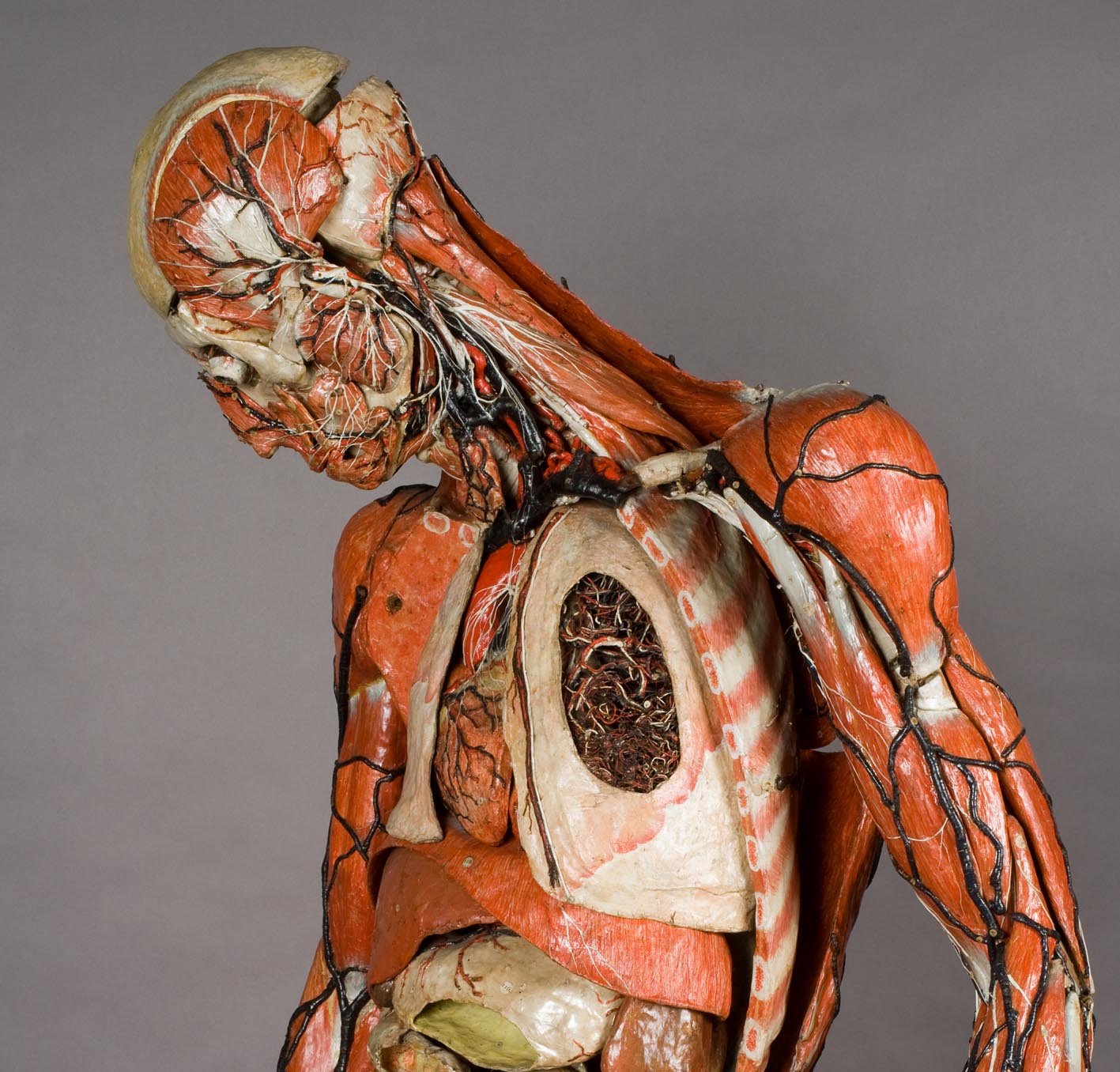
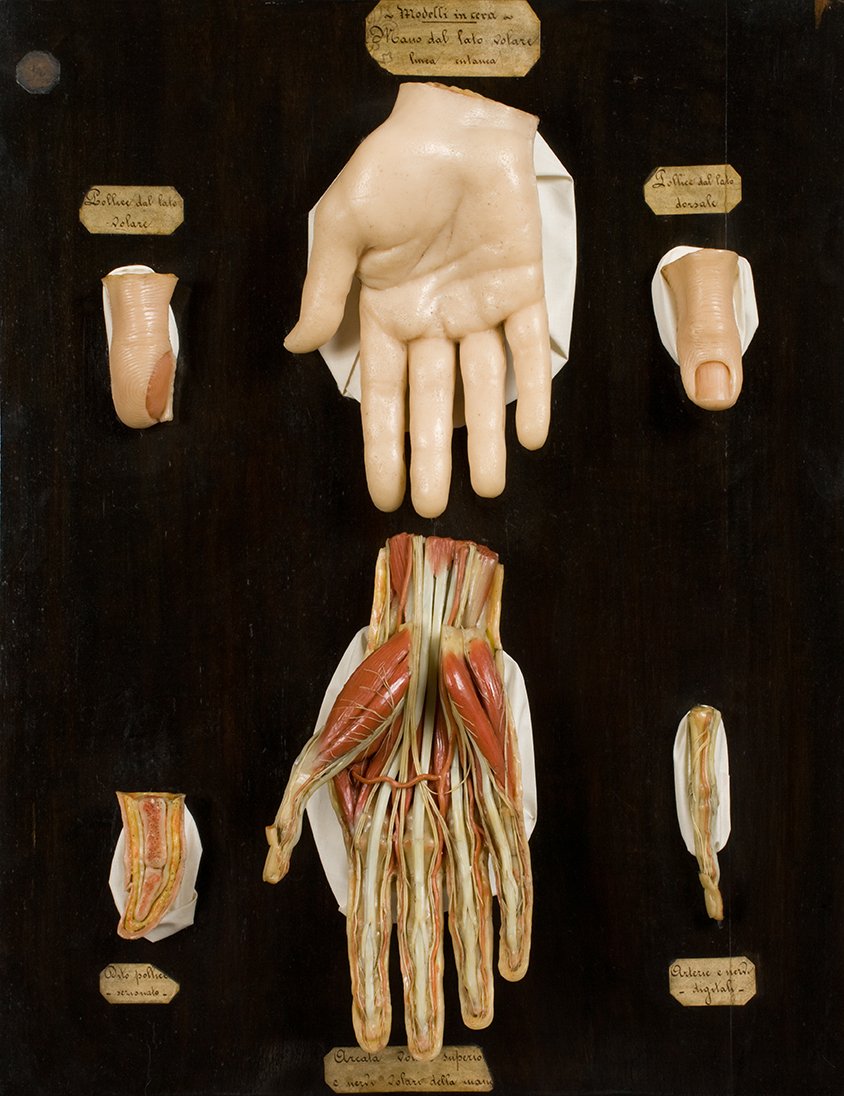
- wax models;
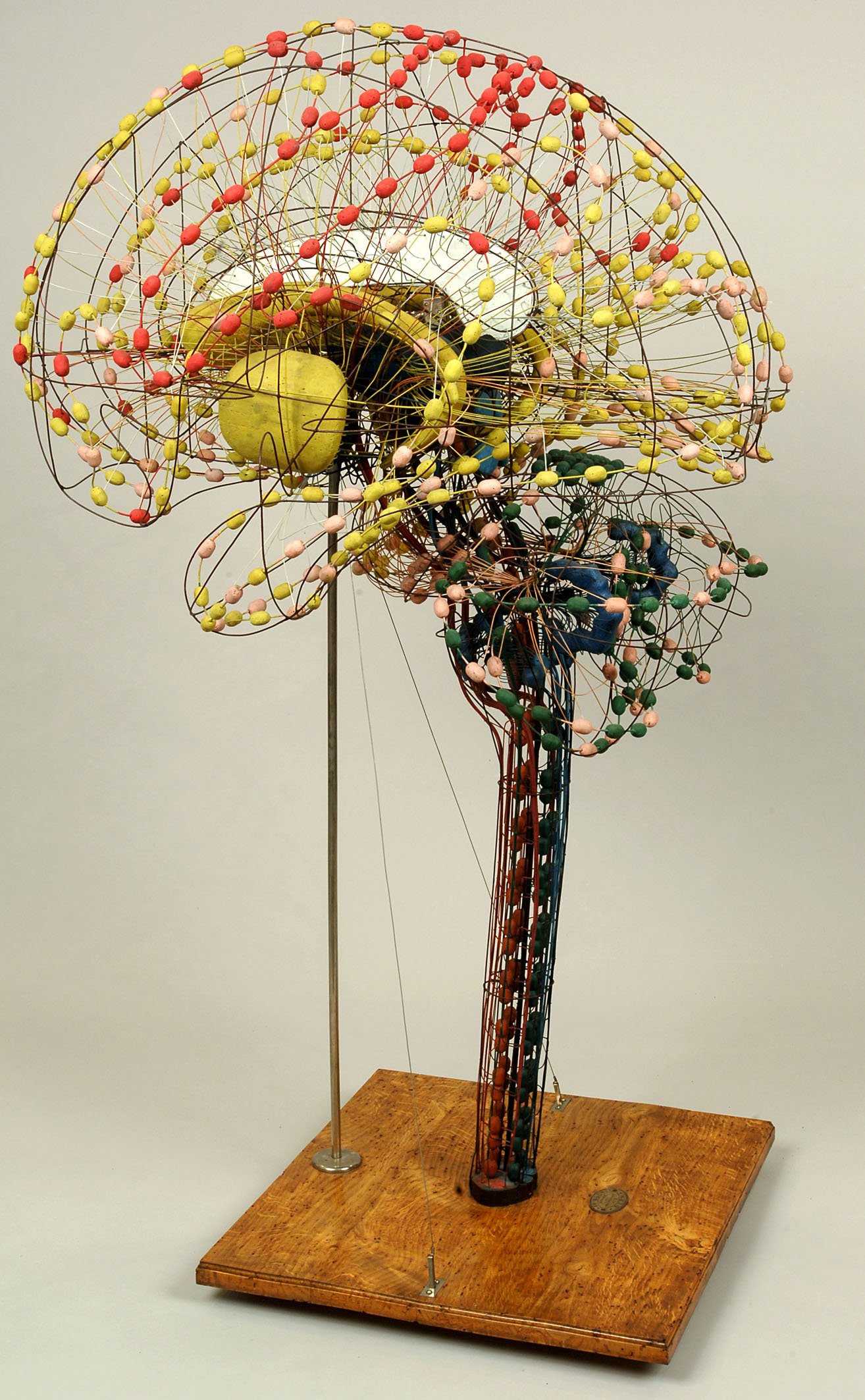
- wood models;
- papier-mâché models;
- liquid anatomical preparations;
- dried anatomical preparations.
The above-mentioned categories are corresponding to two phases of anatomical museology:
- artificial anatomy, which had its heyday between the end of the 18th century and the first half of the 19th century;
- natural anatomy, which came into its own later on.
Collections
Over almost three hundred years, collections of items acquired for educational and scientific purposes supplemented those intended for exhibition.
Wax models
During the first half of the 19th century, the wax anatomical models collection was considered the most significant part of the Museum.
Some of them are of 18th-century make, but most are of later date.
Anatomical collection of dried and liquid preparations
Special significance is given to neuroanatomical preparations: encephala prepared by applying the Giacomini method.
Anthropology collection
It is an extensive, basically craniological collection.
Phrenologyl collection
It comes from the Academy of Medicine in Turin. It includes plaster casts of skulls, heads and encephala of famous people.
Instrument collection
It includes instruments developed since the end of the 18th century, covering the following research fields:
- macroscopic anatomy;
- histology;
- embryology;
- anthropology.
Other Collections
- palaeoanthropology;
- primatology;
- embryology.
Works of Art
Archive
The Museum holds an extensive historical archive, which can be consulted by prior appointment.
Activities
The Museum provides:
- educational activities;
- events;
- guided tours;
- research;
- collections study;
- publishing activity.
Virtual tours, videos and webinars
Gallery
How many things can one learn about the natural world? Find it all out at the Regional Museum of Natural Sciences!