
Montorfano Granite Ecomuseum
Overview
The Montorfano Granite Ecomuseum is an open-air workshop.
It enables visitors to explore:
- the craft of quarrying;
- the traces of processing in abandoned quarries;
- the countless uses of local stone in traditional architecture, terracing and monuments.
The relevant area is the region of Mergozzo and its surroundings.
Typical of such areas are the Granites of the Lakes, outcrops of magmatic rock formed in the Permian period, from 275 to 283 million years ago:
- Montorfano white granite;
- Pink granite of Baveno;
- Green granite from Mergozzo.
Beside them is Candoglia pink marble, used in the construction of Milan Cathedral.
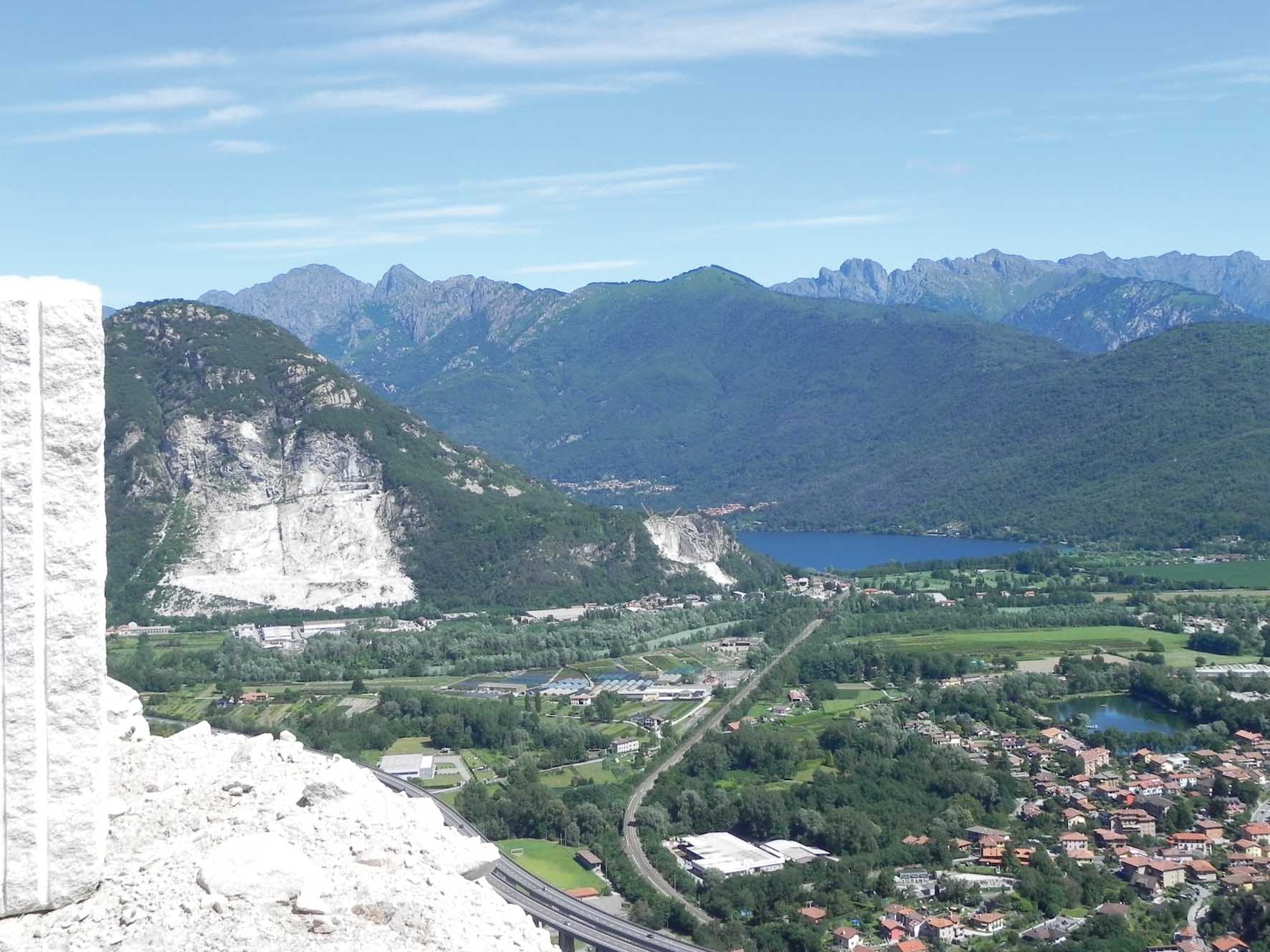
Montorfano is an isolated relief appearing as an imposing block of granite carved by the furrows of centuries-old quarrying activities.
It stands at the heart of the Ecomuseum.
The following entities are part of the Ecomuseum:
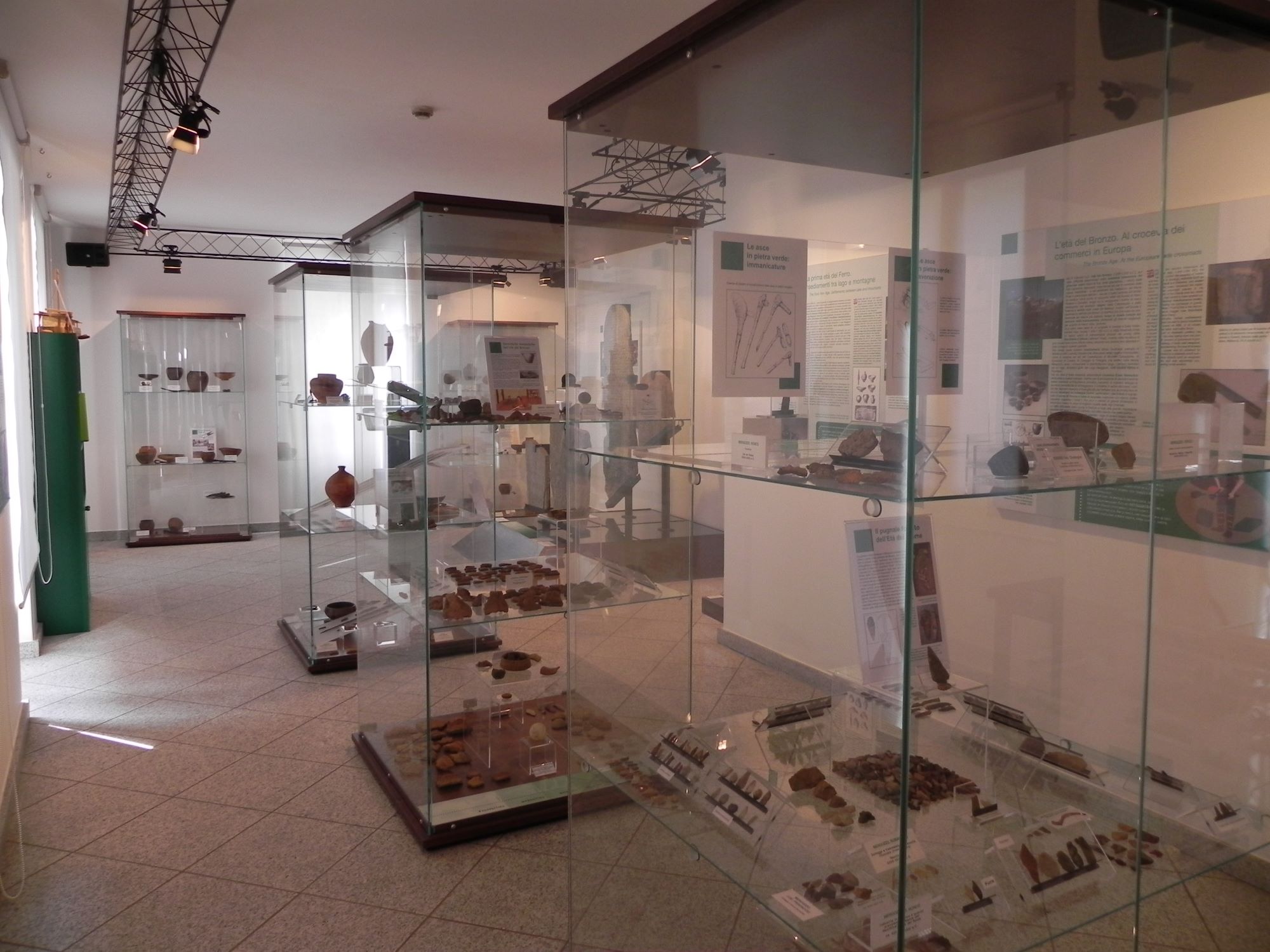
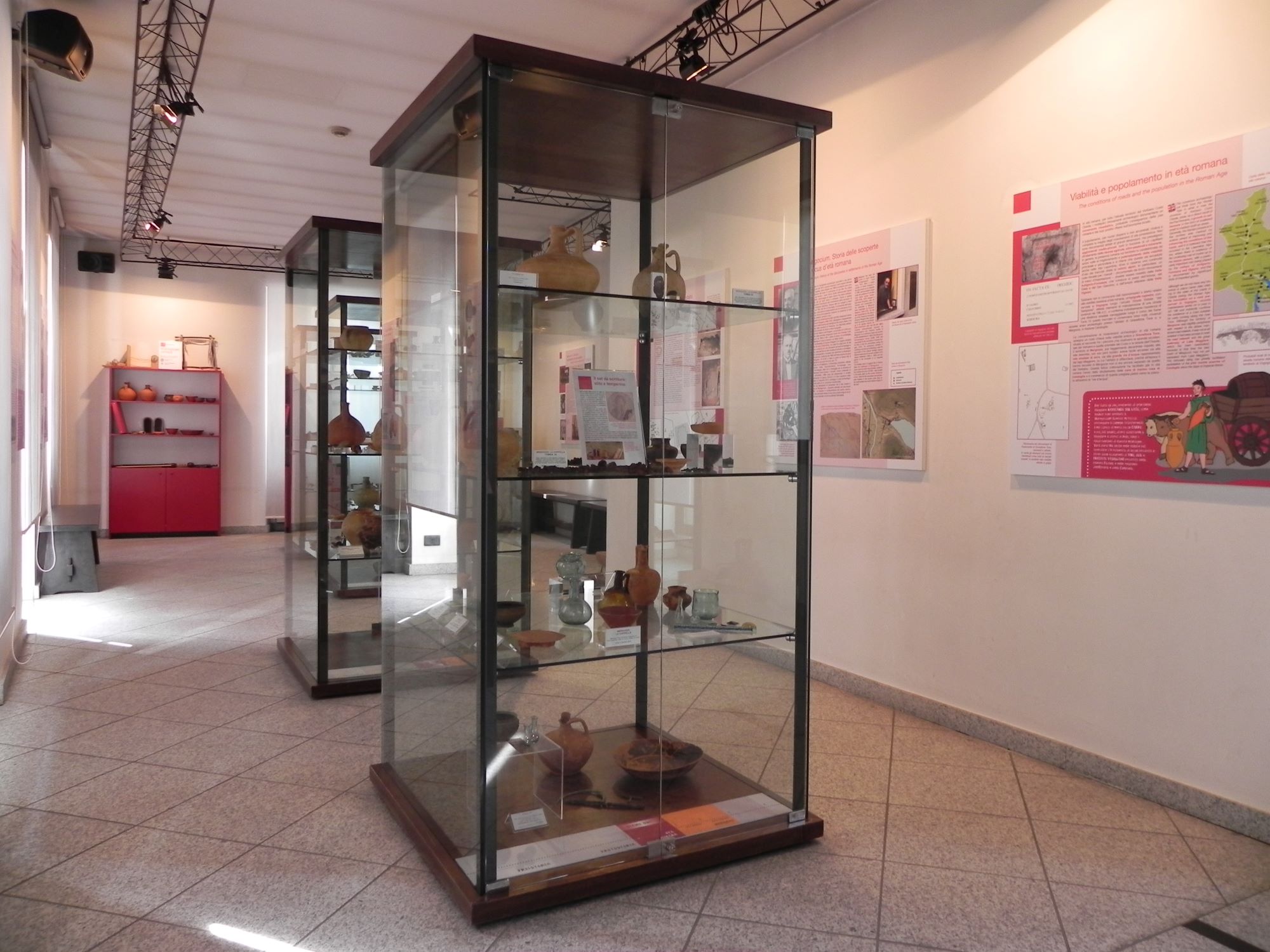
- Civic Archaeological Museum of Mergozzo – MU.ME.
It houses stone artefacts and finds as part of the state-owned archaeological collection given in safekeeping to the Municipality of Mergozzo.
It provides an insight into the most antique uses of stone made by humans from prehistoric times to the Middle Ages.
The MU.ME. also features a showcase dedicated to Palaeontology (link to the MU.ME Fossil Showcase). - The Ancient Social Dairy of Mergozzo.
Former historic building and headquarters of the farmers' consortium for milk processing and butter plus cheese production, dates back from 1868 to the beginning of the 20th century.
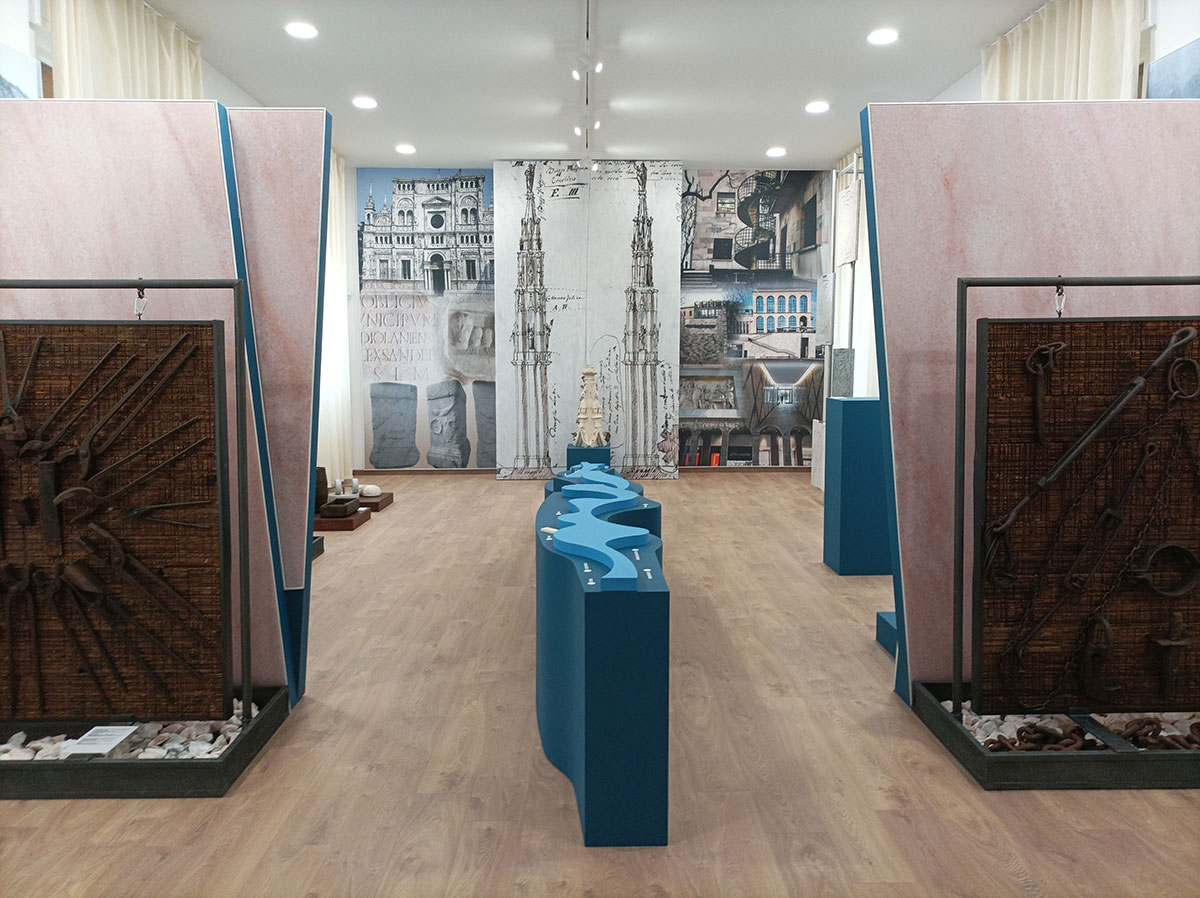
Refurbished in 2018 as a multi-purpose space, such as conference hall, workshop and temporary events venue, it is home to the Ecomuseum. - The Marble and Granite Museum – Mu.Ma.G.
It was established in 2023 by the Val Grande National Park, in partnership with the Municipality of Mergozzo. Materials and documents are from the Granite Ecomuseum and the Veneranda Fabbrica of Milan Duomo.
It displays:- stone extraction and processing tools: cutting, tools for lifting and handling blocks and for related quarrying activities;
- examples of the artistic use of marble and granite.
- It enables visitors to track the journey of these stones from two points of view:
- physical: from the Candoglia Mother Quarry along the waterway to Milan;
- transformative: through the processes that made them so popular.
- The thematic route to the Montorfano site: the quarries of the granite with the same name.
- The thematic route to the Candoglia site: the quarries of the pink marble with the same name.
- The thematic route to the ancient megalithic complex of Ca' d'la Norma.
- The historical-architectural route throughout the old town of Mergozzo.
- The medieval village and the archaeological site of the San Giovanni in Montorfano church.
The education hall of MU.ME and Mu.Ma.G. preserve petrographic samples of marbles and granites which are used for hands-on experience and workshops for students.
The local stone has been extensively used by humans as far back as ancient times, as testified by:
- archaeological finds;
- the early Christian and Romanesque church of San Giovanni in Montorfano;
- traditional buildings;
- the cultivated terraces;
- the fortifications of the Cadorna Line;
- the minute network of road connections.
Mergozzo's territory is included in the Sesia Valgrande UNESCO Geopark.
Gallery
How many things can one learn about the natural world? Find it all out at the Regional Museum of Natural Sciences!