
Paradisia Alpine Botanical Garden
Overview
The Paradisia Alpine Botanical Garden is located within the Gran Paradiso National Park.
The Garden is named after the mountain lily Paradisea liliastrum, a lily with delicate white flowers that grows wild in the surrounding meadows.
Its altitude is 1,700 metres.
It covers an area of approximately 10,000 square metres, richly endowed with natural hollows and depressions that provide ideal conditions for the cultivation of mountain and alpine plant species.
It is home to more than 1,000 species, including:
- those collected in the wild;
- those grown from seed in the nursery attached to the garden.
Paradisia places great emphasis on education and public outreach.
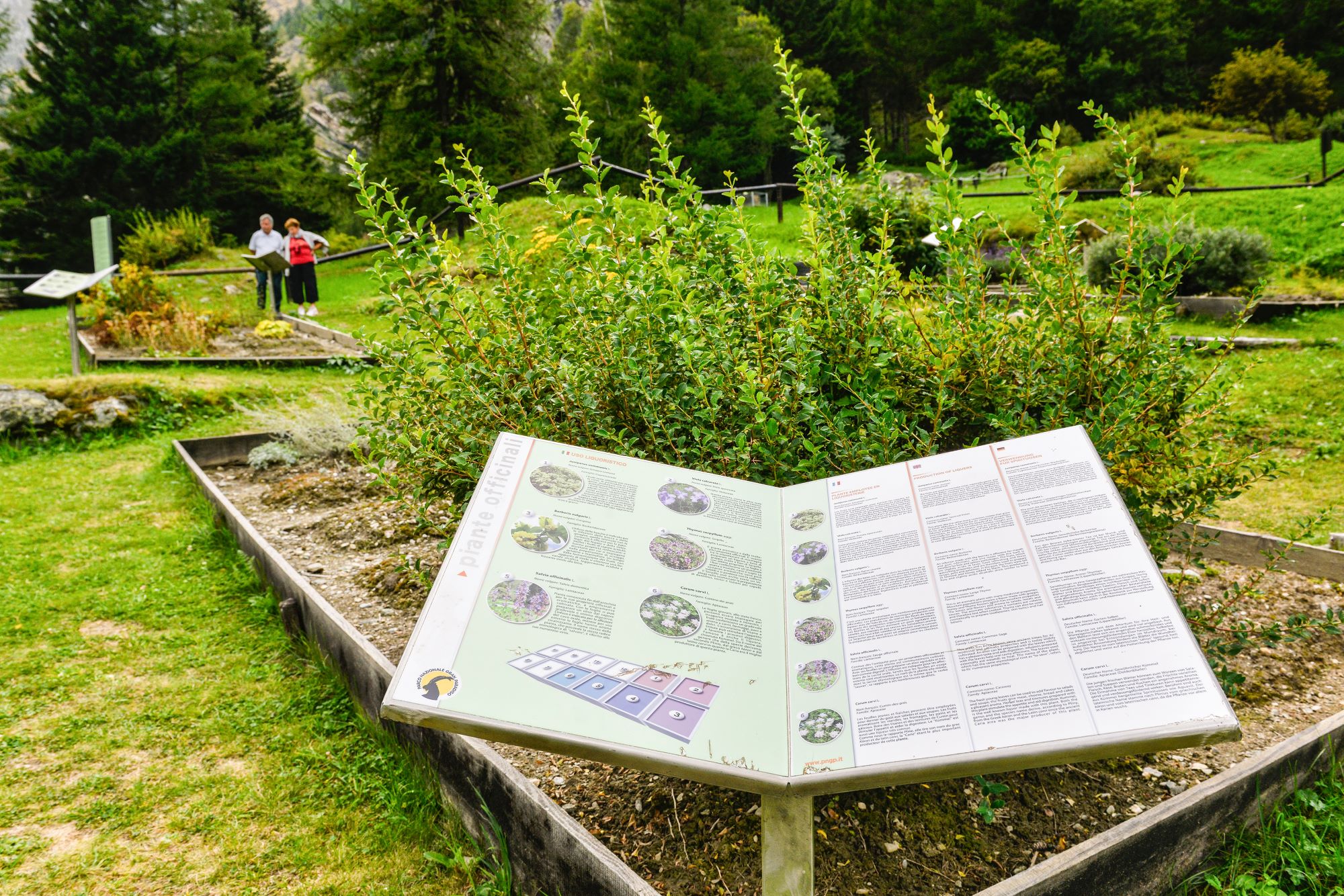
Information panels are located along the visitor route.
Each plant species is labelled with a descriptive tag.
Visitors can learn about plant species they might encounter on a hike, compare them with similar species, and discover their scientific names and geographical distribution.
The Garden is a key reference point for botanists and naturalists in their research activities.
Some natural habitats have been recreated in the Garden, with their typical plant communities:
- pseudo-steppe;
- peat bog;
- litter environment;
- alder grove.
The butterfly garden is an educational trail featuring nectar-producing plants and host flora to support native butterfly species and their larvae, highlighting the vital ecological role of Lepidoptera as key pollinators.
The medicinal plant section showcases species traditionally harvested in the Park's valleys, categorized by their historical and cultural applications:
- Therapeutics: Traditional remedies and pharmacopeia.
- Distillation: Botanicals used in local liqueurs and spirits.
- Gastronomy: Edible herbs and culinary plants.
- Ethnobotany: Species formulated for cosmetics and skincare.
The unique lichen exhibit highlights symbiotic organisms formed by fungi and algae.
In the Park, they naturally colonize large boulders, thriving in pristine, pollution-free microclimates.
The petrographic exhibit showcases representative rock specimens from the Cogne Valley and surrounding areas of the Park.
Following field collection and garden harvesting, seeds are cataloged in an annual Index Seminum.
This germplasm is then globally distributed among botanical institutions worldwide.
Compiled annually, the Index Seminum is the official seed catalogue featuring specimens collected in the wild and within the Garden’s grounds.
The Garden cultivate a global network of living collections, actively exchanging specimens with botanical and horticultural institutions worldwide.
Gallery
Affiliated Organizations
Torino
Gran Paradiso National Park
 Botany
 LIBRARY
 ZOOLOGY
 Mineralogy, Petrography, Geology
 PALAEONTOLOGY
 Entomology
 Other
Other
How many things can one learn about the natural world? Find it all out at the Regional Museum of Natural Sciences!