Roero Natural History Museum
Overview
The Roero Natural History Museum was set up in the early 1980s.
It was housed in the Vezza d'Alba primary school to bring schoolchildren closer to the natural sciences by directly observing the natural world around them.
Thus, a first collection of small animal fossils was formed, which has been enriched over time through the dedication of teachers, contributors, organisations and institutions.
The Museum turned from a School Museum into a Municipal Museum in 1999, according to an agreement between the School and the Municipality.
It is currently run by volunteers, supported by teachers, researchers and naturalists.
The museum houses three exhibition halls, plus a video lounge equipped with an interactive panel.
It aims at being a Nature Tourism and Environment Museum.
They come from:
- the Roero area;
- the Wild Animals Recovery Centre (CRAS), in Bernezzo.
No architectural barriers.
Collections
The museum is organised into three sections, which are set up in three exhibition halls.
Geology Hall
The Geology Hall shows:
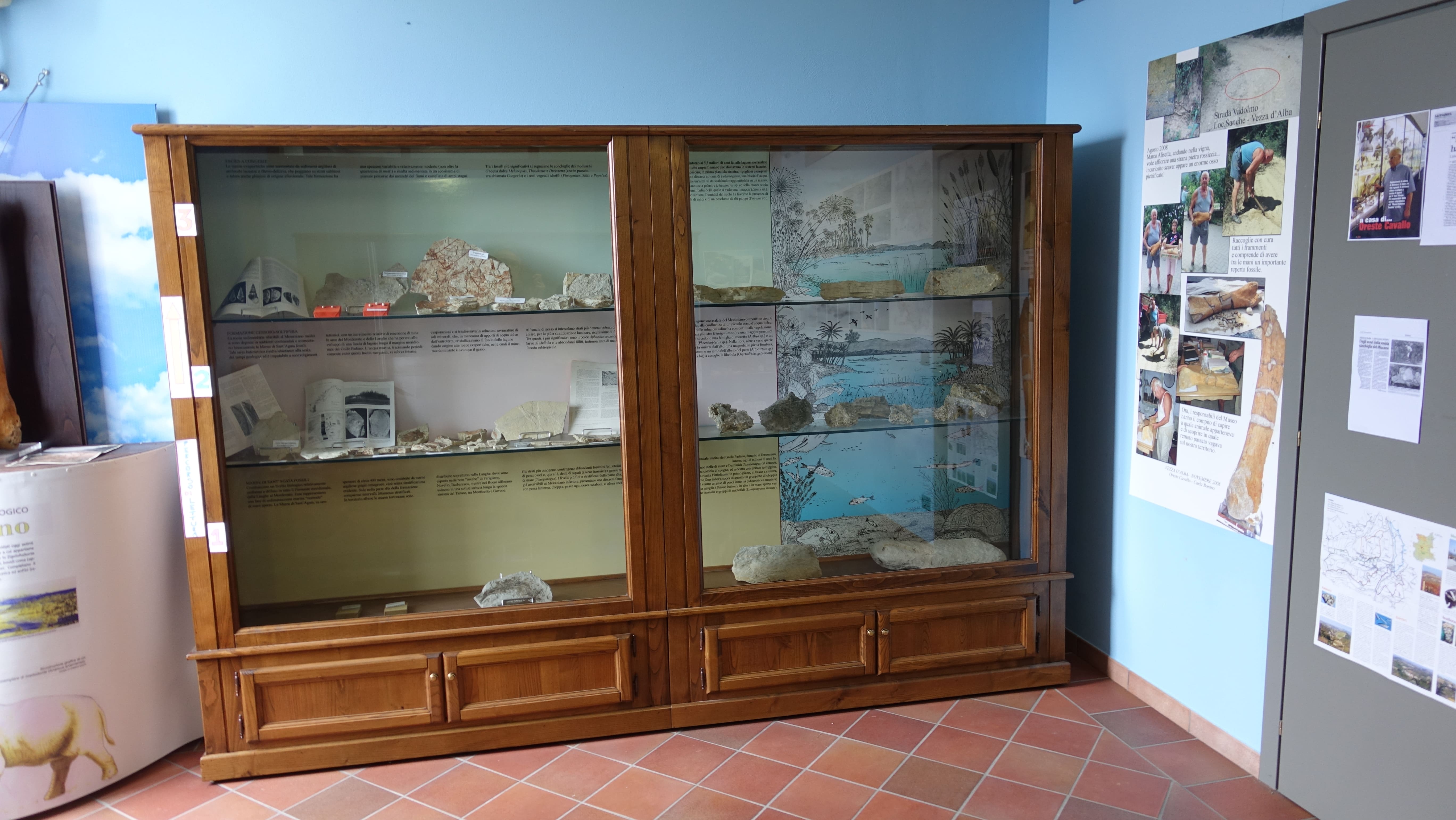
- the stratigraphy of the Roero hills;
- samples of the different types of soil;
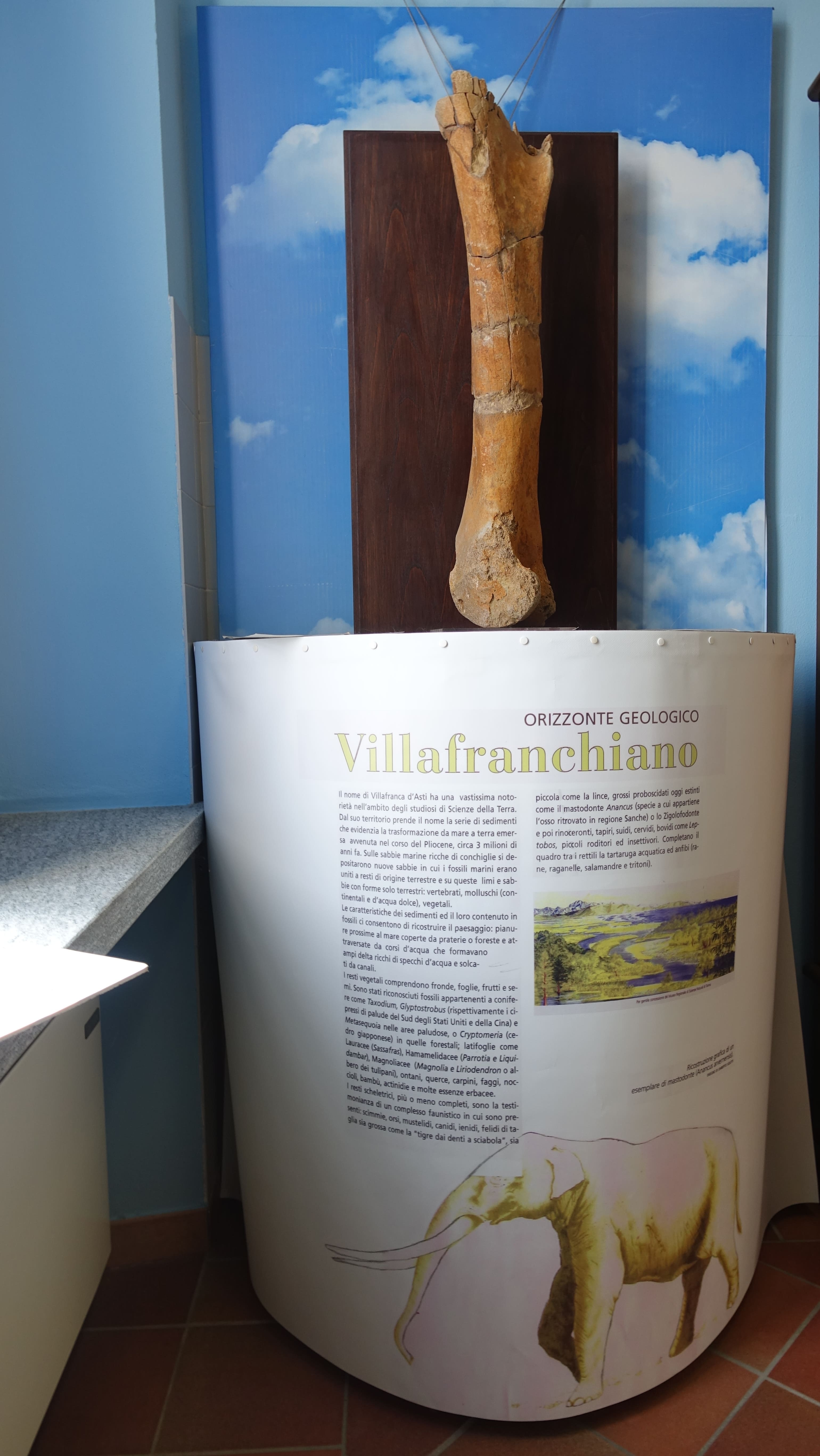
- fossils, with their palaeoenvironment reconstruction.
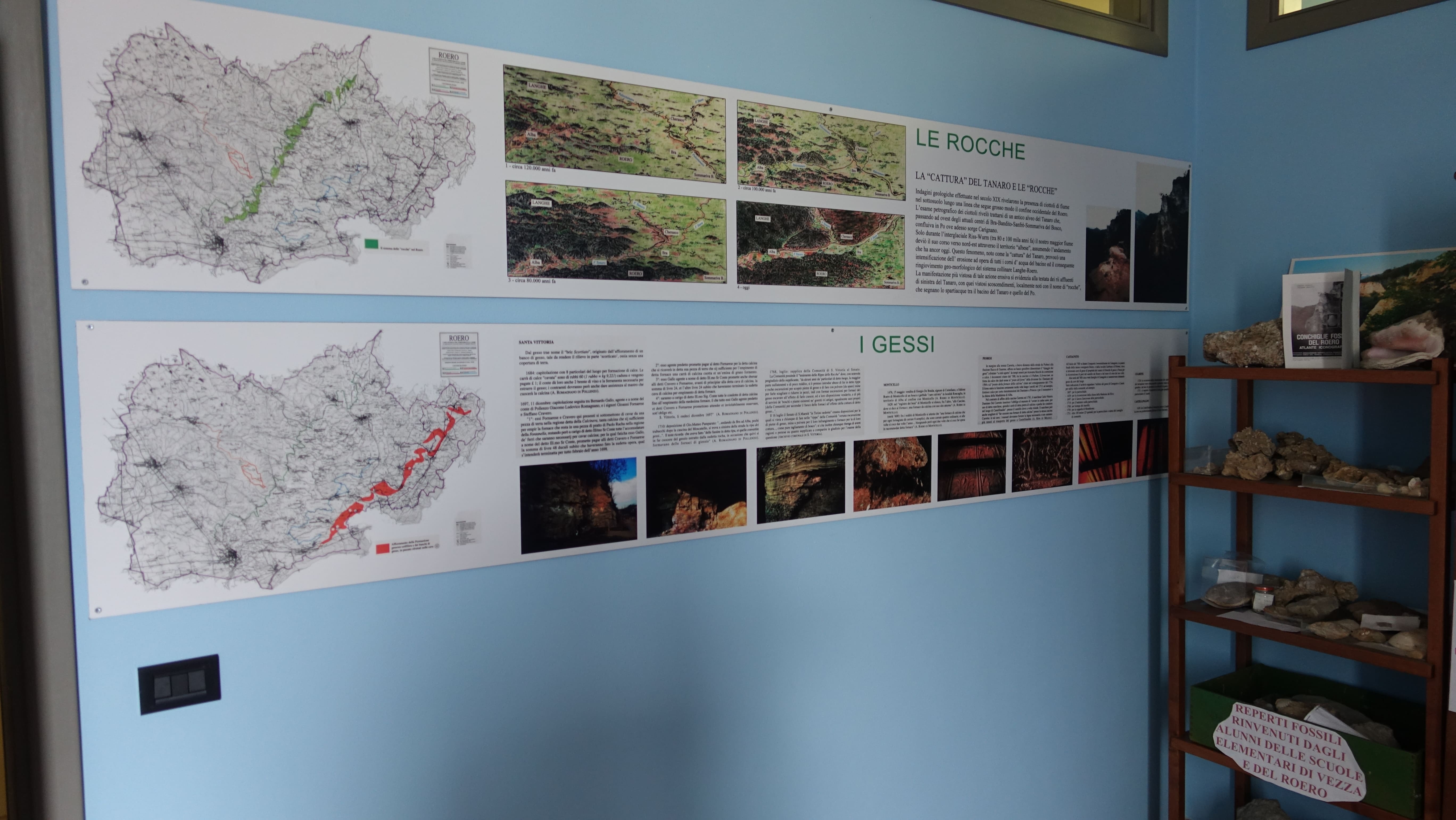
Two large panels depict:
- the capture of the Tanaro River;
- the consequent Rocche formation: chasms hundreds of metres deep;
- the Gypsum formations in the Roero territory.
Natural History Hall
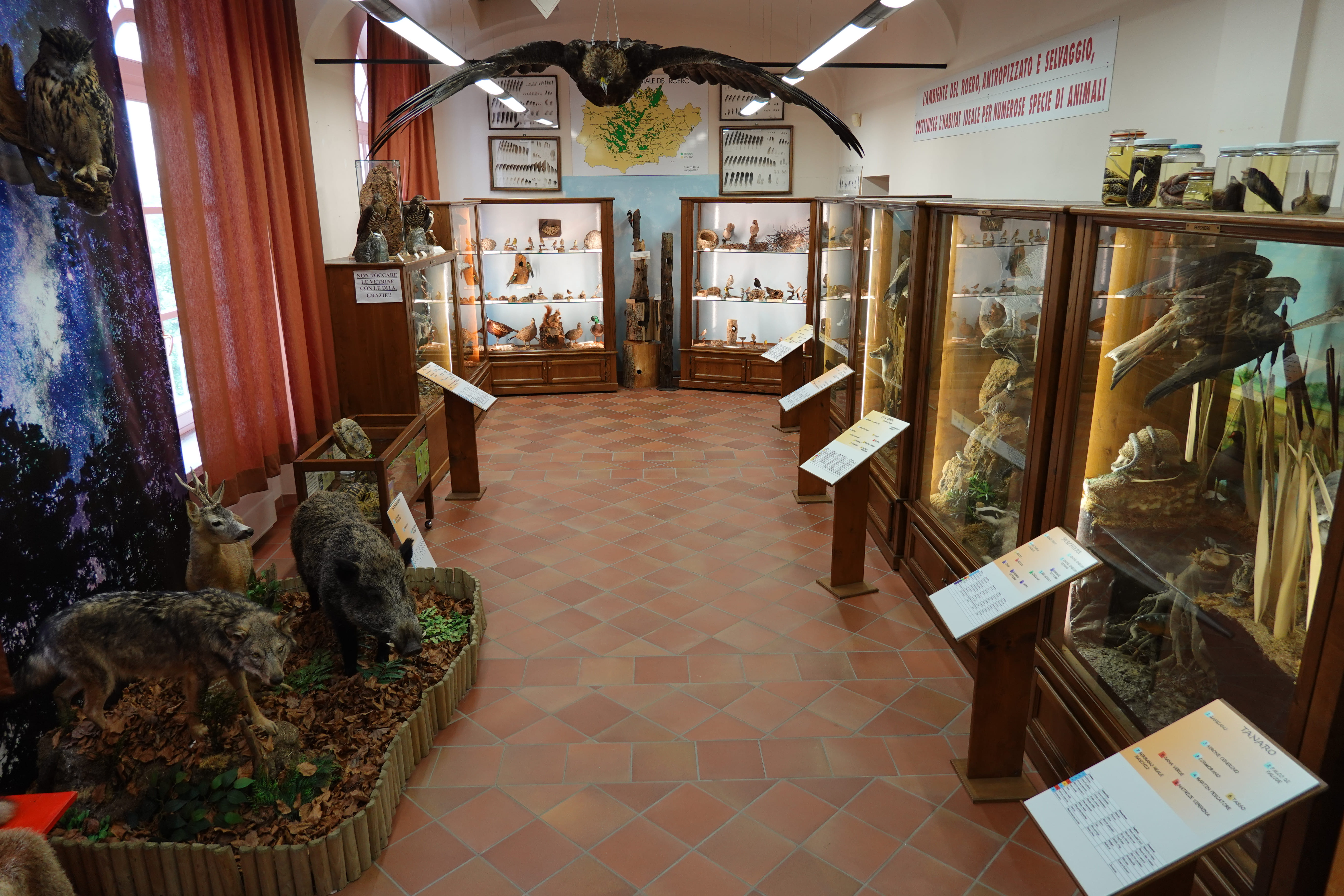
Seven dioramas depict the Roero's environments:
- wet woodland;
- dry woodland;
- the Tanaro River;
- the so called peschiere: bights with conditions for fish reproduction);
- Rocche
- croplands;
- ruderal areas.
The hall also contains showcases displaying:
- a large collection of nests;
- a few collections of feathers;
- a collection of beaks;
- some small mammal skulls;
- an osteology collection representing the evolution of living creatures from water to land;
- a peasant hen-house with some typical courtyard animals;
- some specimens of allochthonous fauna.
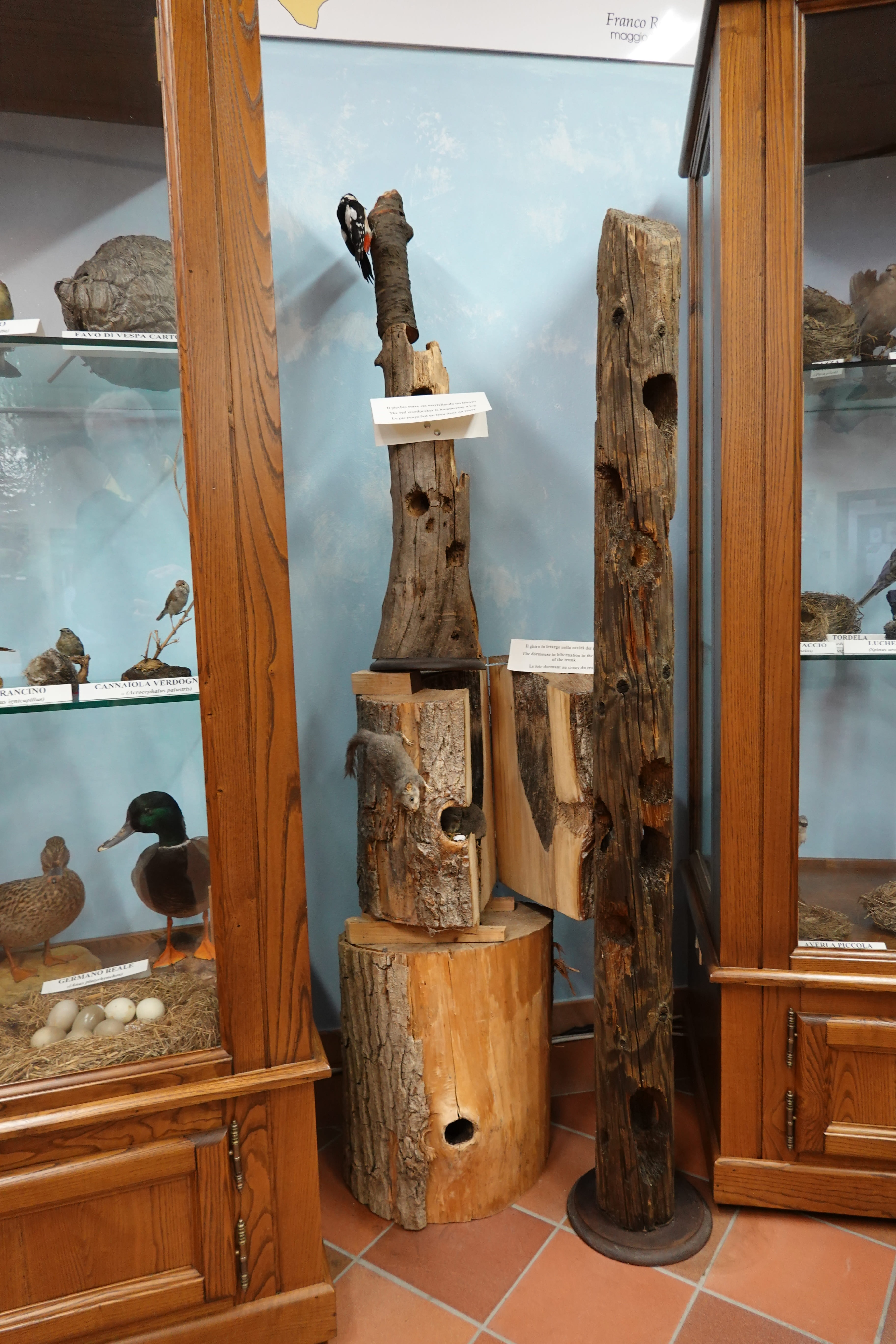
Two open environment reconstructions integrate the display:
- the dormouse hibernating in the hollowed-out trunk and the woodpecker in hollowing-out action;
- large mammals inhabiting the Roero: wild boar, wolf and fawn.
A large eagle with outstretched wings soars over the hall.
It comes from the Maritime Alps Natural Park and might have ventured as far as the nearby Roero in search of food.
Entomology Hall
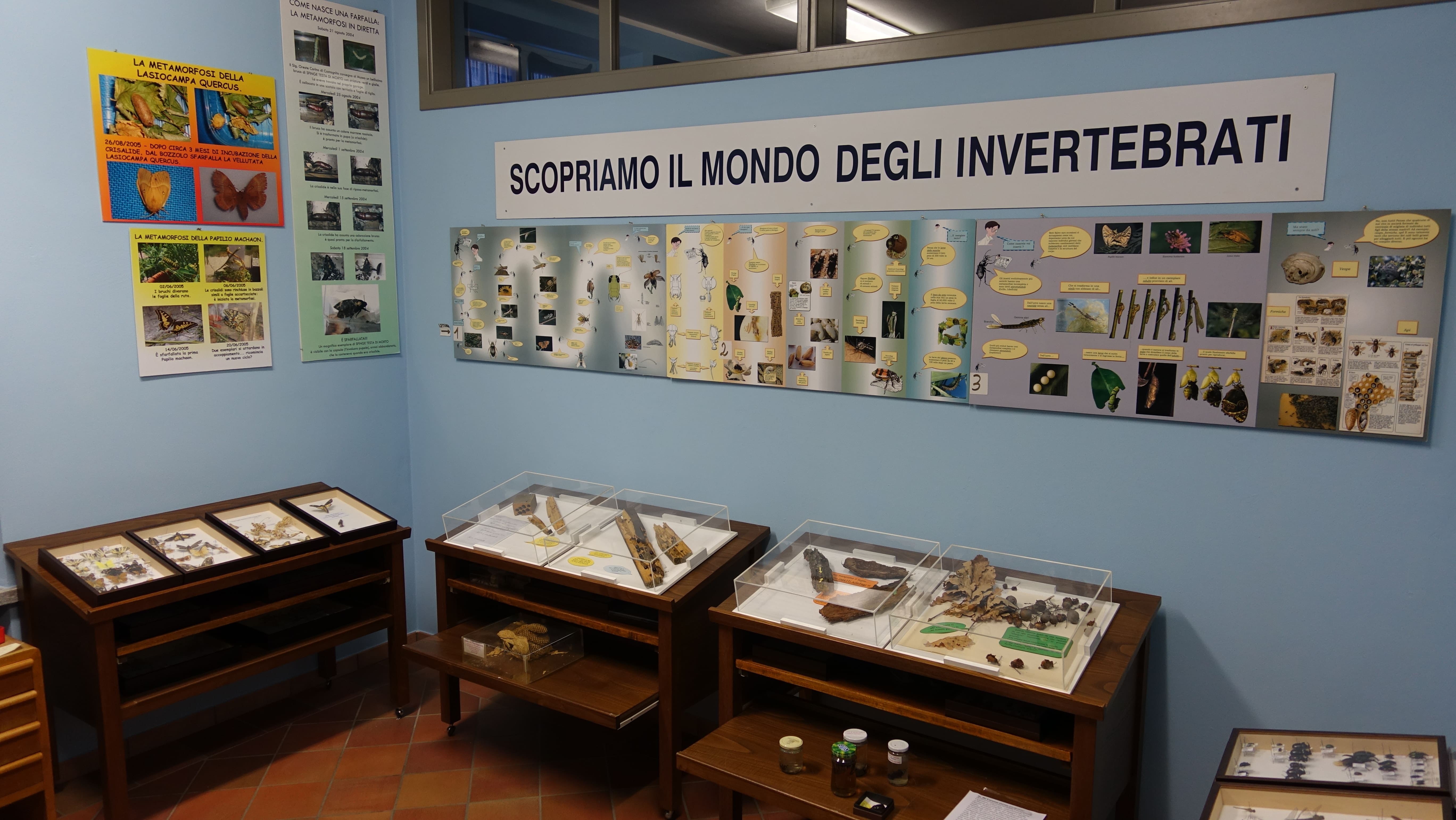
Four large pull-out flap displays contain entomological box with the most widespread insects of the Roero.
Panels tell the insects features through the imaginary dialogue between a ground beetle (carabus) and a child about anatomy, organs and metamorphosis.
Other panels depict the butterfly metamorphosis that occurred in school settings, as schoolchildren brought caterpillars, collected together with the leaves they feed on, into the classroom.
Library
The Museum provides a space for promotional material, leaflets and books on the flora and fossils of the Langa and Roero.
Activities
The Museum's programme changes every year, providing a diverse range of projects aimed at raising awareness and knowledge of the region's natural and architectural environment.
Permanently scheduled events:
- Animal Freeing Day, in partnership with the Bernezzo Wild Animal Recovery Centre;
- Arbor Day;
- nature walks on the Roero trails.
Further initiatives undertaken by the Museum:
- the Badger, an animal guide to the Museum;
- are swallows still returning to Vezza?;
- celebrity trees in the Roero, still or no longer existing;
- Cleaning Roero, jointly organised by all schools and the Knights Order of San Michele of Roero;
- Protect the Forest regulation sign, to be posted in each municipality of the Roero, upon request.
Gallery
How many things can one learn about the natural world? Find it all out at the Regional Museum of Natural Sciences!